
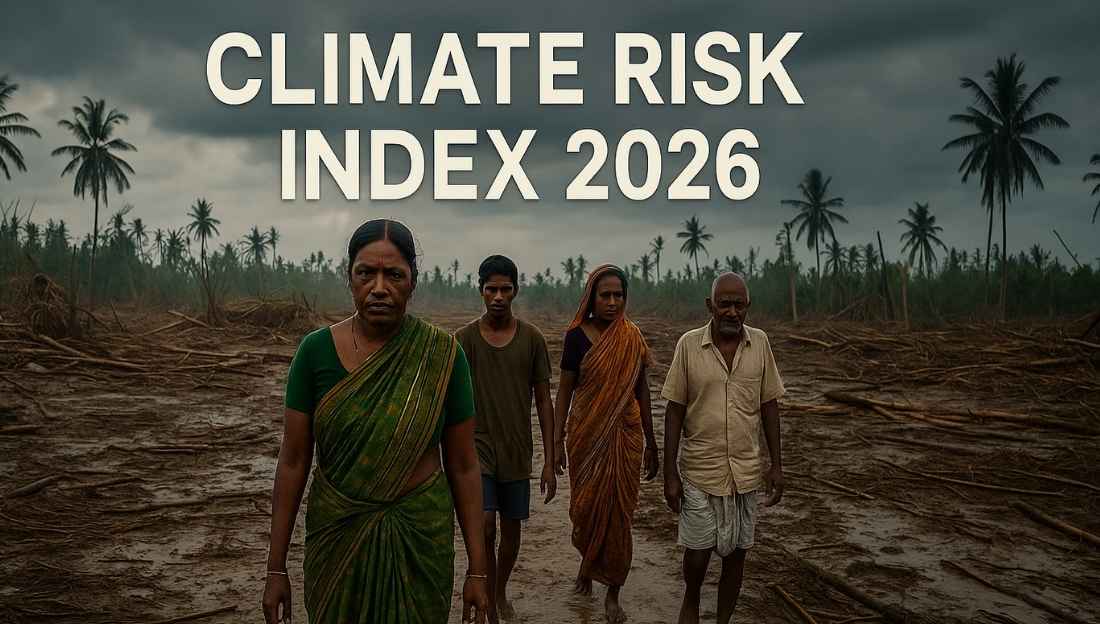
The Climate Risk Index (CRI) 2026 is an annual assessment that measures how severely countries have been affected by extreme weather events over the last three decades (1995–2024). Published by the international think-tank Germanwatch, the index highlights the human and economic impacts of climate disasters such as storms, floods, heatwaves, and cyclones.For students and competitive exam aspirants, CRI 2026 is important because it provides updated, factual evidence of global climate vulnerability, climate justice debates, and the need for stronger adaptation policies.
Why CRI 2026 Matters (Exam-Oriented Highlights)
1. Shows Real Impact of Climate Change
CRI 2026 is based on long-term data, making it a reliable indicator of how climate extremes affect lives, economies, and development. It highlights the rising frequency of disasters and the high cost of inaction.
2. Important for Environment, Geography, and Current Affairs
This index is highly relevant for UPSC, State PSC, SSC, Railways, and other exams where climate change, disaster management, and sustainable development are common topics.
3. Strengthens Global Climate Justice Debate
Most of the worst-hit countries are low-income or small island nations that contribute very little to global carbon emissions. Yet, they suffer the highest climate burdens. CRI helps highlight this global inequality.
4. Useful for Policy and Governance Questions
The report helps understand why countries need better adaptation plans, resilient infrastructure, early warning systems, and funding through climate finance and loss-and-damage mechanisms.
Methodology: How CRI Is Calculated
CRI ranks countries based on the following indicators gathered from international disaster databases:
- Total deaths caused by extreme weather
- Deaths per 100,000 population
- Economic losses (in USD, adjusted for inflation)
- Losses as a percentage of GDP
- Number of extreme events recorded
Only rapid-onset events like storms, floods, heatwaves, wildfires, and cyclones are included.
Slow-onset events like sea-level rise or glacier melt are excluded.This makes CRI a retrospective index — it shows what has already happened, not what will happen in the future.
Major Findings of CRI 2026
1. Rising Global Impact
From 1995 to 2024:
- Over 9,700 extreme weather events were recorded.
- More than 8.3 lakh (832,000) people lost their lives.
- Direct economic losses crossed USD 4.5 trillion.
- Storms alone caused more than half of total economic losses.
- Heatwaves and storms were responsible for the highest number of deaths.
These numbers prove that extreme weather events are becoming more frequent, more deadly, and more expensive.
2. Most Affected Countries (Long-Term: 1995–2024)
According to the long-term CRI:
- Dominica
- Myanmar
- Honduras
- Libya
- Haiti
- Grenada
- Philippines
- Nicaragua
- India
- Bahamas
These rankings show that developing countries and island nations are repeatedly hit and struggle with recovery.
3. Most Affected Countries in 2024 (Single-Year Rankings)
The countries most affected in the year 2024 include:
- St Vincent and the Grenadines
- Grenada
- Chad
- Papua New Guinea
- Niger
- Nepal
- Philippines
- Malawi
- Myanmar
- Vietnam
These single-year rankings highlight the sudden and extreme nature of climate events.
India in CRI 2026
India ranks 9th in the long-term analysis (1995–2024), reflecting high vulnerability to extreme weather.
India’s Long-Term Impacts
- Around 430 major extreme weather events in 30 years
- Over 80,000+ fatalities
- Economic losses of nearly USD 170 billion
- Repeated disasters such as floods, heatwaves, droughts, and cyclones
Why India is Highly Vulnerable
- Large coastal population
- Rapid urbanization
- High dependence on monsoon
- Rising temperatures and frequent heatwaves
- Flood-prone river basins
- Cyclone impact on eastern and western coasts
Implications for India
- Stress on agriculture, water resources, health, and infrastructure
- Need for stronger disaster preparedness
- Urgent need for climate-resilient development
- Greater focus on adaptation finance and technology
Key Takeaways for Exams
Important Data Points
- Period covered: 1995–2024
- Total extreme weather events: 9,700+
- Total deaths: 8.3 lakh+
- Total economic losses: USD 4.5 trillion
- India’s long-term rank: 9th
- Most impacted event type: Storms
Conceptual Points
- CRI is a retrospective index
- Focuses only on rapid-onset weather events
- Highlights vulnerability, exposure, and adaptation gaps
- Useful for climate finance and loss-and-damage negotiations
Limitations of CRI
- Does not include slow-onset climate impacts
- Does not predict future risk
- Some countries may underreport disaster data
- Economic loss estimates vary by source
Despite these limitations, CRI remains one of the most widely used tools for understanding climate vulnerability.
The Climate Risk Index 2026 is a strong reminder that climate change is no longer a distant threat — it is a lived reality for millions. The rising number of extreme weather events, massive economic losses, and disproportionate impact on developing nations highlight the urgency of climate action. For exam aspirants, CRI 2026 offers valuable insights into global climate politics, India’s vulnerabilities, and the need for resilient development.If you want, I can also create:
